Explore the complete line of AISCT field instruments and software platforms engineered toeliminate contamination uncertainty across petroleum, salinity, and volatile organic sites.
Explore the Ecosystem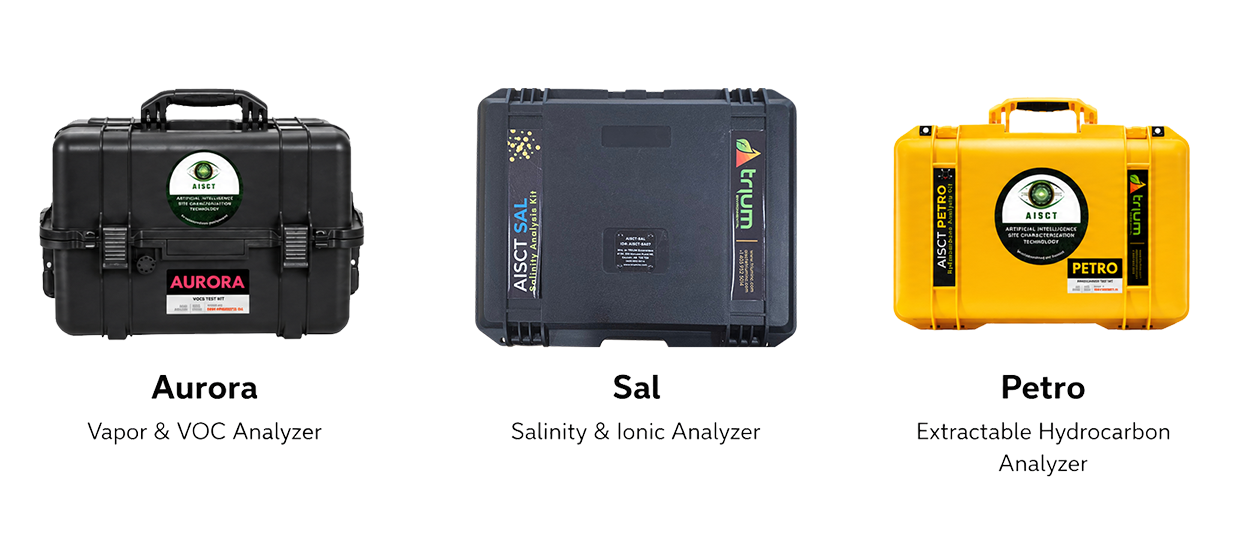
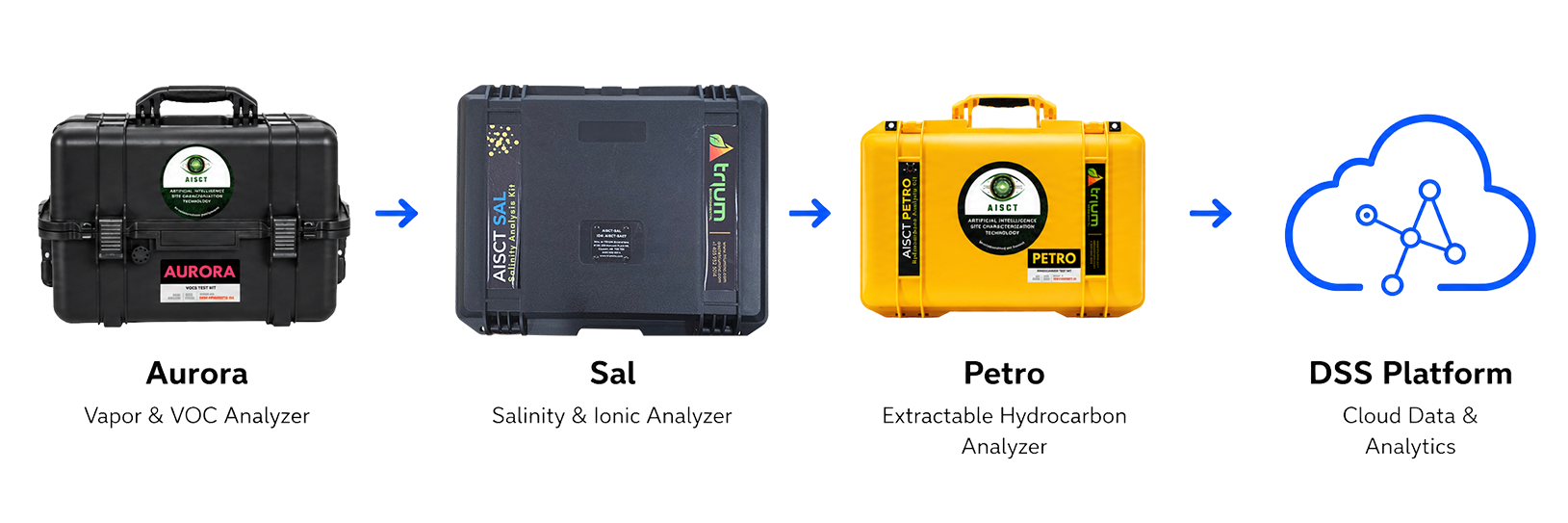
AISCT components can be deployed individually — Aurora on a vapour-driven hydrocarbonsite, Sal on a brine release, Petro on a peat-heavy extractable HC programme The DSS platform is contaminant-agnostic: it ingests data from whichever units are deployed.
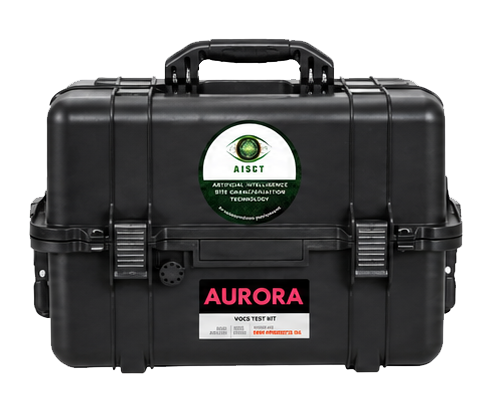
The AISCT Aurora System provides AI-integrated vapour screening for volatile organic compounds (VOCs), chlorinated VOCs (CVOCs), BTEX compounds, and gasoline-rangehydrocarbons in soil. Designed to be deployed from Day 1 of a site investigation, as the site data set grows, the AI model's predictive accuracy increases.
View Use Cases
All OVA-driven hydrocarbon sites regardless of phase

VOCs, CVOCs, BTEX, gasoline/diesel-range hydrocarbons (F1 fraction and volatile F2)

Real-time field results, exceedance flags, confidence metrics, DSS-integrated dataset
.png)
The AISCT SAL System provides AI-integrated, ion-specific salinity screening for chloride (with sodium capability in development) in soil and water samples. It is designed for all phases of investigation and remediation on salt-impacted sites.
View Use CasesAll phases of salt-impacted site investigation and remediation
Chloride (Cl⁻); sodium (Na⁺) capability in development
>90% classification accuracy vs. laboratory data, DSS-integrated dataset
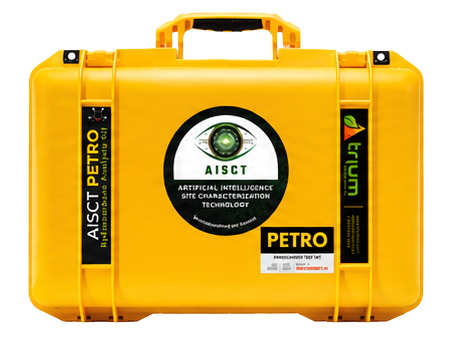
The AISCT Petro System provides AI-integrated, solvent-extraction-based PHC screening for petroleum hydrocarbon fractions in soil. Petro directly captures the extractable PHC fraction providing significantly higher correlation to laboratory data.
View Use CasesLarger remediation programmes, extractable-HC-driven sites
TPH, F2 and F3 / LEPH and HEPH extractable petroleum hydrocarbons
Demonstrated effectiveness where vapour methods produce biogenic false positives, DSS-integrated dataset
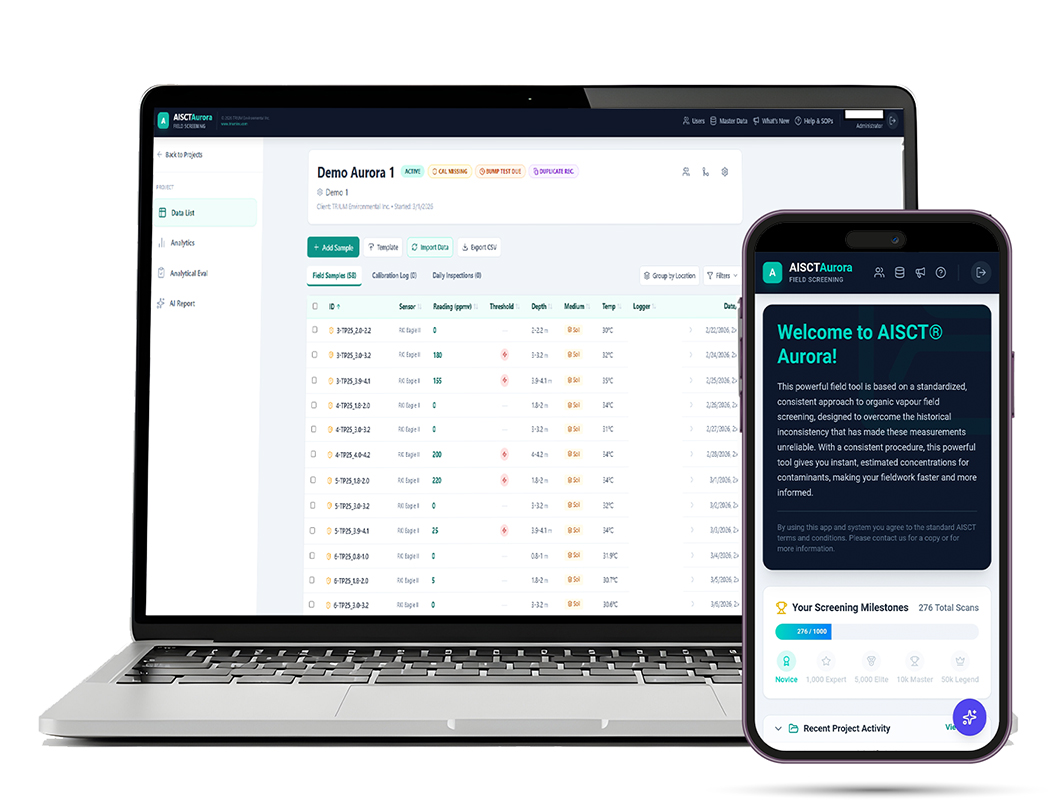
The DSS ingests data from Aurora, Sal, and Petro instruments as it is generated in the field. All data is organized by site, phase, and sample location — creating a unified, queryable site data record from Day 1 of the programme.
View Use Cases
Field Data from Aurora, Sal or Petro
Captures GPS location and sample metadata, and presents real-time results with exceedance flags
AISCT components can be deployed individually — Aurora on a vapour-driven hydrocarbonsite, Sal on a brine release, Petro on a peat-heavy extractable HC programme. But they are designed to work together. When multiple contaminant classes are present on the same site, a multi-unit deployment produces an integrated dataset that no single instrument can provide.
The DSS platform is contaminant-agnostic: it ingests data from whichever units are deployed, maintains a unified site data record, and provides cross-contaminant intelligence that is invisible when instruments operate independently.

Ready to Transform Your Field Characterization? Request a demonstration or order AISCT® hardware for your upcoming field program.