Direct field solvent-extraction chemistry targeting extractable range hydrocarbons (C10 –C32). Delivers direct laboratory-equivalent fraction or TPH estimates.
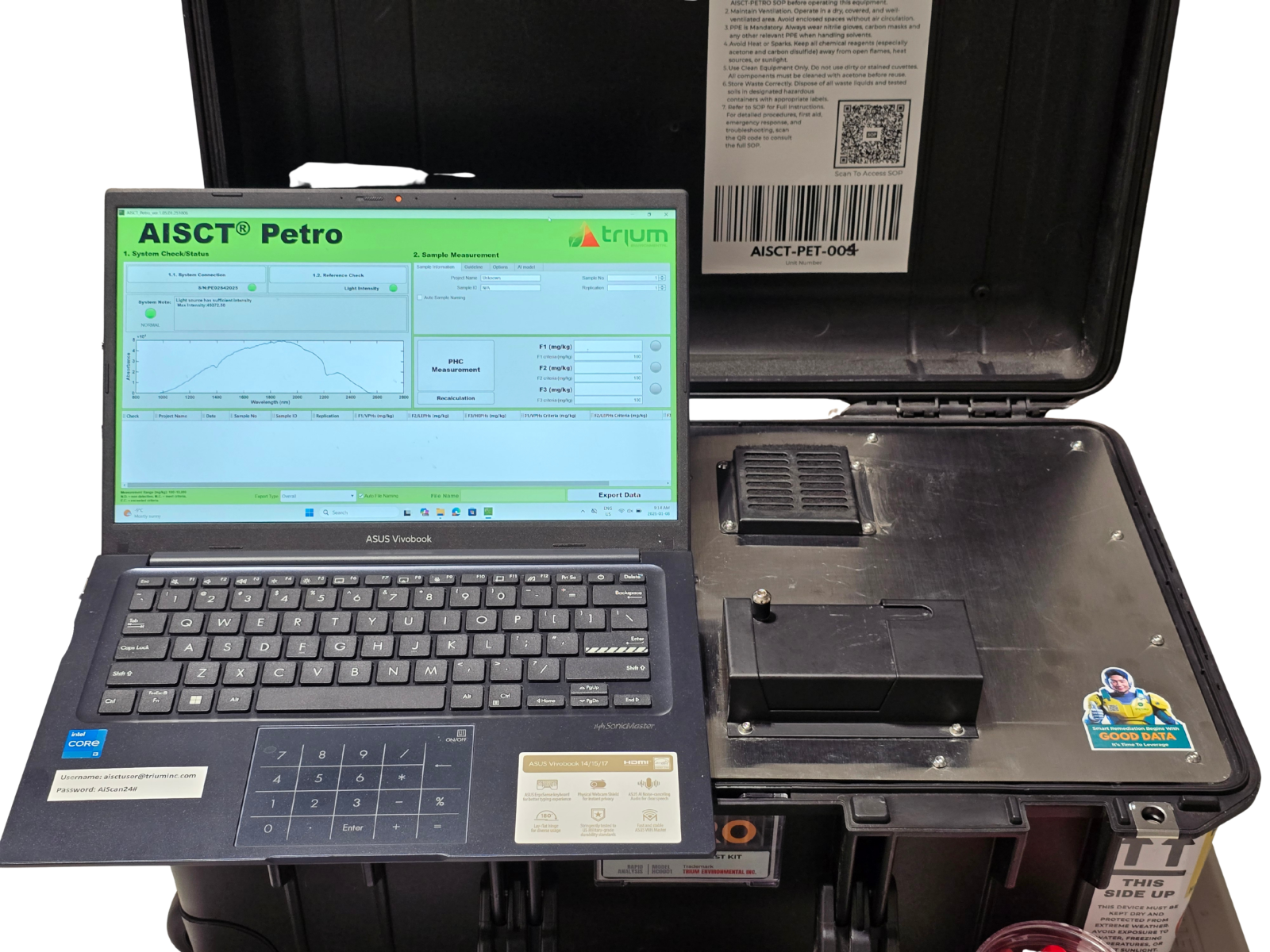
The AISCT Petro System provides AI-integrated, solvent-extraction-based PHC screening for petroleum hydrocarbon fractions in soil.
By employing a solvent-extraction approach that mirrors laboratory methodology, Petro directly captures the extractable PHC fraction (TPH, F2 and F3 /LEPH and HEPH), providing significantly higher correlation to laboratory data than vapour-phase proxy methods.
Speak with our experts & book a demonstration.
Request a PETRO Demonstration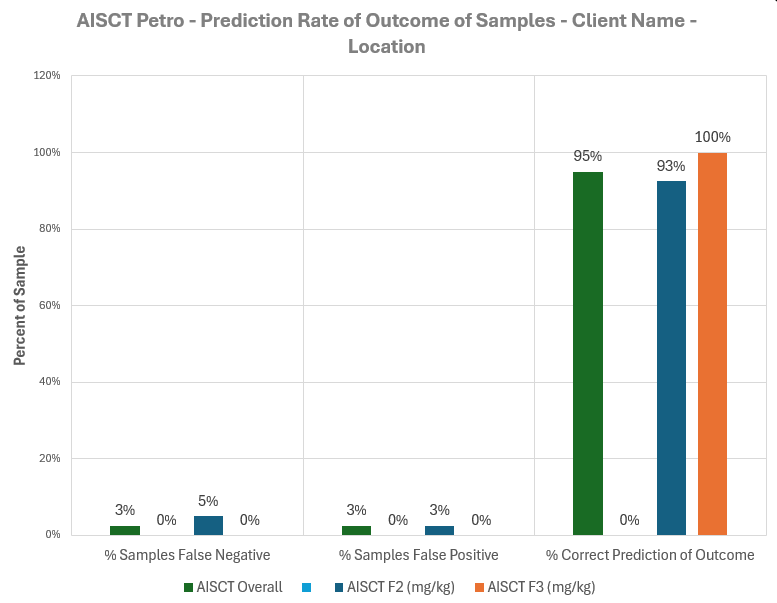
Conventional OVA/PID and headspace bag methods fail for three interconnected reasons:

Petro's solvent-extraction approach:

Aurora was developed in direct alignment with published regulatory guidance such as:

Solvent-Extraction PHC Testing: Petro advances the solvent-extraction method recognized in CCME guidance as a field analytical approach for extractable PHC

Petro data aligns with CCME petroleum hydrocarbon fraction criteria (F2, F3) for soil

QA/QC: Petro incorporates automated reference checks, calibration records, blanks, duplicates, and triplicates

Petro supports field screening programmes aligned with CSA and provincial regulatory standards for petroleum hydrocarbon assessment

TPH, F2 and F3 / LEPH and HEPH extractable petroleum hydrocarbons
Solvent-extraction methodology mirroring laboratory extractable PHC analysis
Fraction-specific extraction — captures what labs measure, not a vapour proxy
Demonstrated effectiveness where vapour methods produce biogenic false positives
Automated reference checks, calibration records, blanks, duplicates, triplicates
CCME Vol. 1 Section 5.5.1, CCME PHC Fraction Criteria, CSA Z769
Larger remediation programmes, extractable-HC-driven sites, peat/organic environments
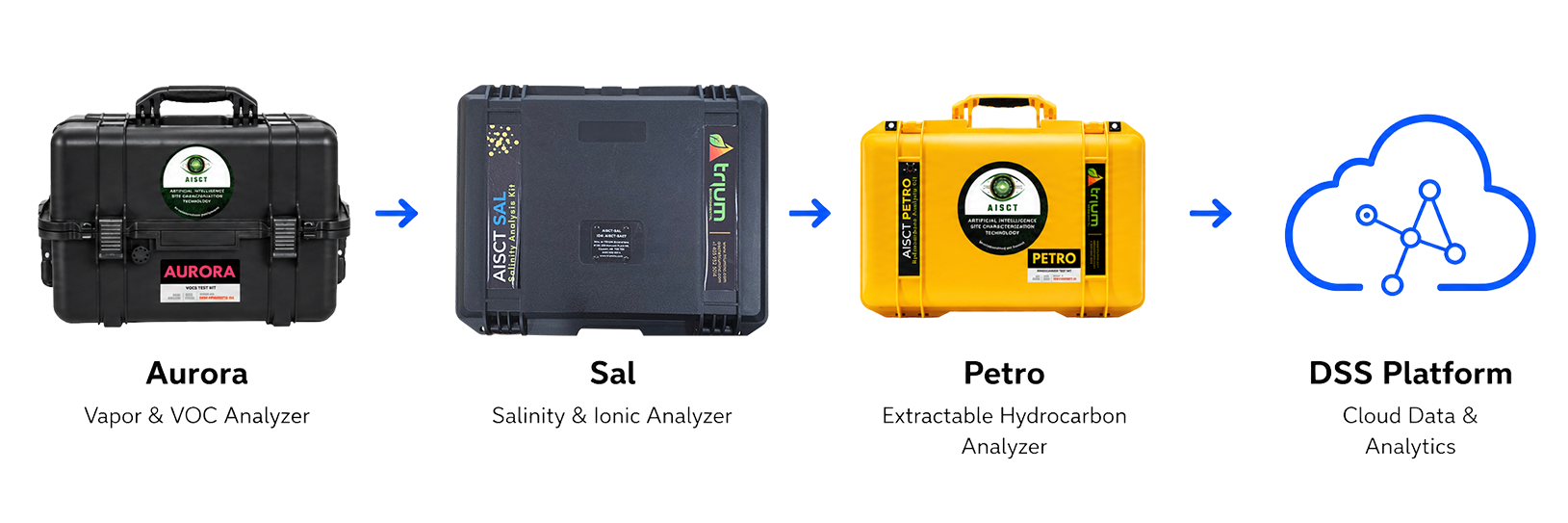
AISCT components can be deployed individually — Aurora on a vapour-driven hydrocarbon site, Sal on a brine release, Petro on a peat-heavy extractable HC programme. But they are designed to work together. When multiple contaminant classes are present on the same site, a multi-unit deployment produces an integrated dataset that no single instrument can provide.
The DSS platform is contaminant-agnostic: it ingests data from whichever units are deployed, maintains a unified site data record, and provides cross-contaminant intelligence that is invisible when instruments operate independently.

Ready to Transform Your Field Characterization? Request a demonstration or order AISCT® hardware for your upcoming field program.