The SaaS intelligence layer connecting AISCT hardware units. Automates real-time QA/QClogging, applies machine-learning laboratory correlation models, generates GIS contamination heatmaps, andexports audit-ready regulatory reports.
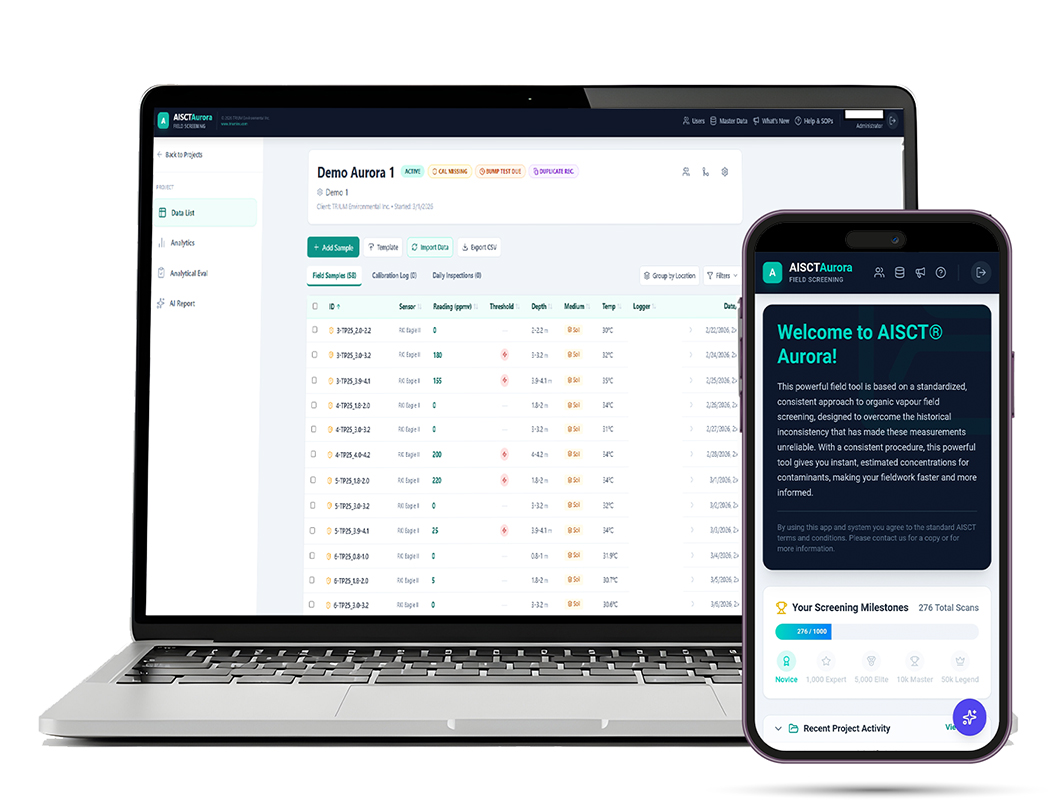
High-density field data creates a new challenge: data management at field scale. When a single remediation programme generates hundreds or thousands of AISCT data points across multiple instruments, contaminant classes, and investigation phases, the information management demands exceed what spreadsheets, PDFs, and email threads can handle.
The DSS was built in response to a real operational need: to give field staff and project managers a single, integrated platform that makes the data actionable without requiring datascience expertise. AI integration was not a feature added after the fact — it was the reason the DSS was conceived. The AI manages the complexity so the professional can make the decision.
Speak with our experts & book a demonstration.
Request Demo / Order Equipment.png)
The DSS ingests data from Aurora, Sal, and Petro instruments as it is generated in the field. All data is organized by site, phase, and sample location — creating a unified, queryable site data record from Day 1 of the programme.

The DSS applies trained AI models to raw field data, producing:

Every AISCT data point is associated with its QA/QC record: calibration logs, bump tests, blanks, duplicates, triplicates, and step-down protocol compliance. The DSS tracks QA/QC status in real time and generates automated QA/QC reports that meet data quality objectives without additional data entry.

One of the DSS's most valuable functions is helping professionals identify which field samples warrant laboratory submission. Rather than submitting a fixed proportion of all samples, the DSS uses population analysis and exceedance probability to prioritize laboratory confirmation where it adds the most value — reducing unnecessary laboratory costs while increasing the defensibility of the sample selection.

When laboratory results return, the DSS automatically pairs them with the corresponding AISCT field data. This continuous calibration loop improves the AI model's site-specific correlation overtime — so the more AISCT data and laboratory data are generated on a site, the more precisely the DSS can estimate laboratory outcomes from field readings alone.
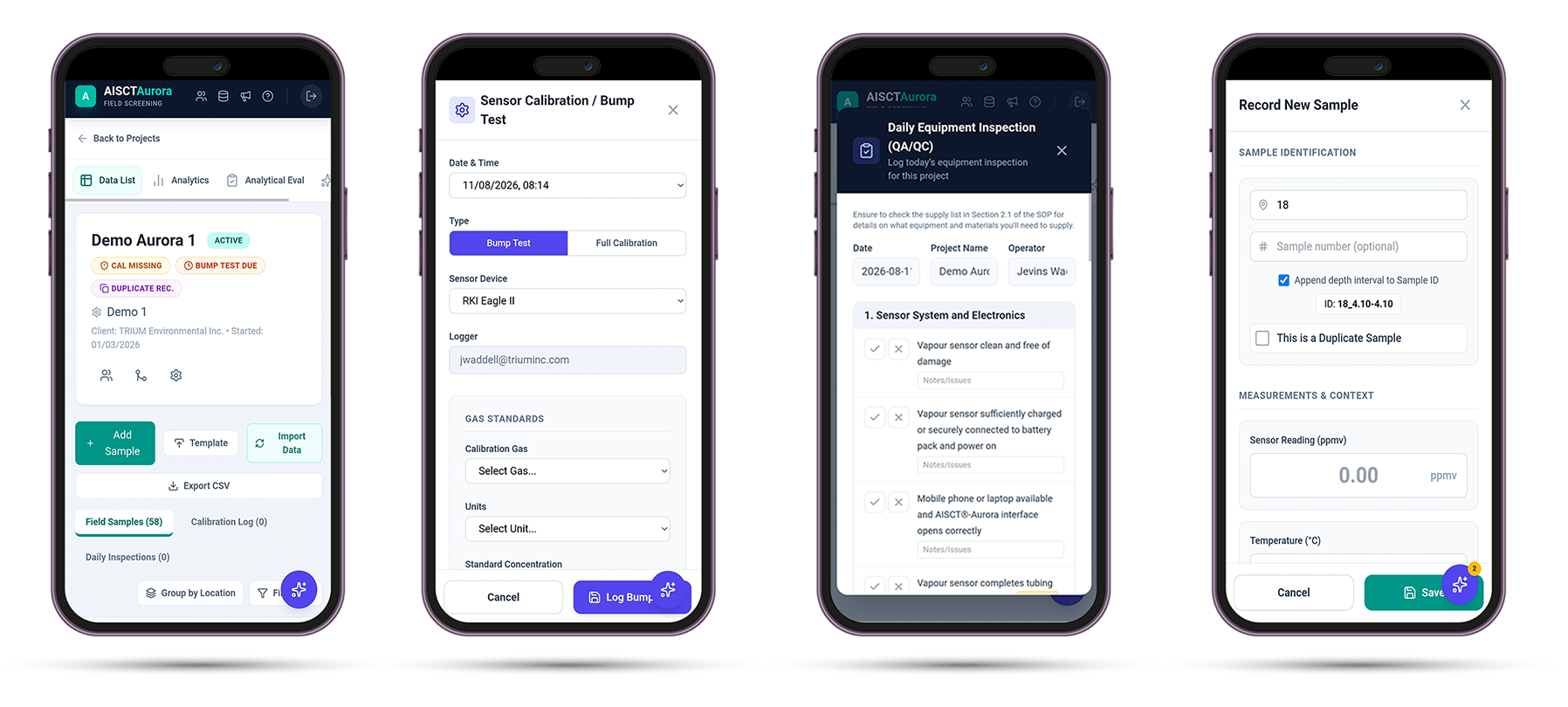
The DSS includes a field-facing mobile application that guides field staff through sampling procedures, enforces step-down protocols and QA/QC checkpoints, captures GPS location and sample metadata, and presents real-time results with exceedance flags — all without requiringconnectivity during field operations. Data syncs to the DSS platform when connectivity is available.
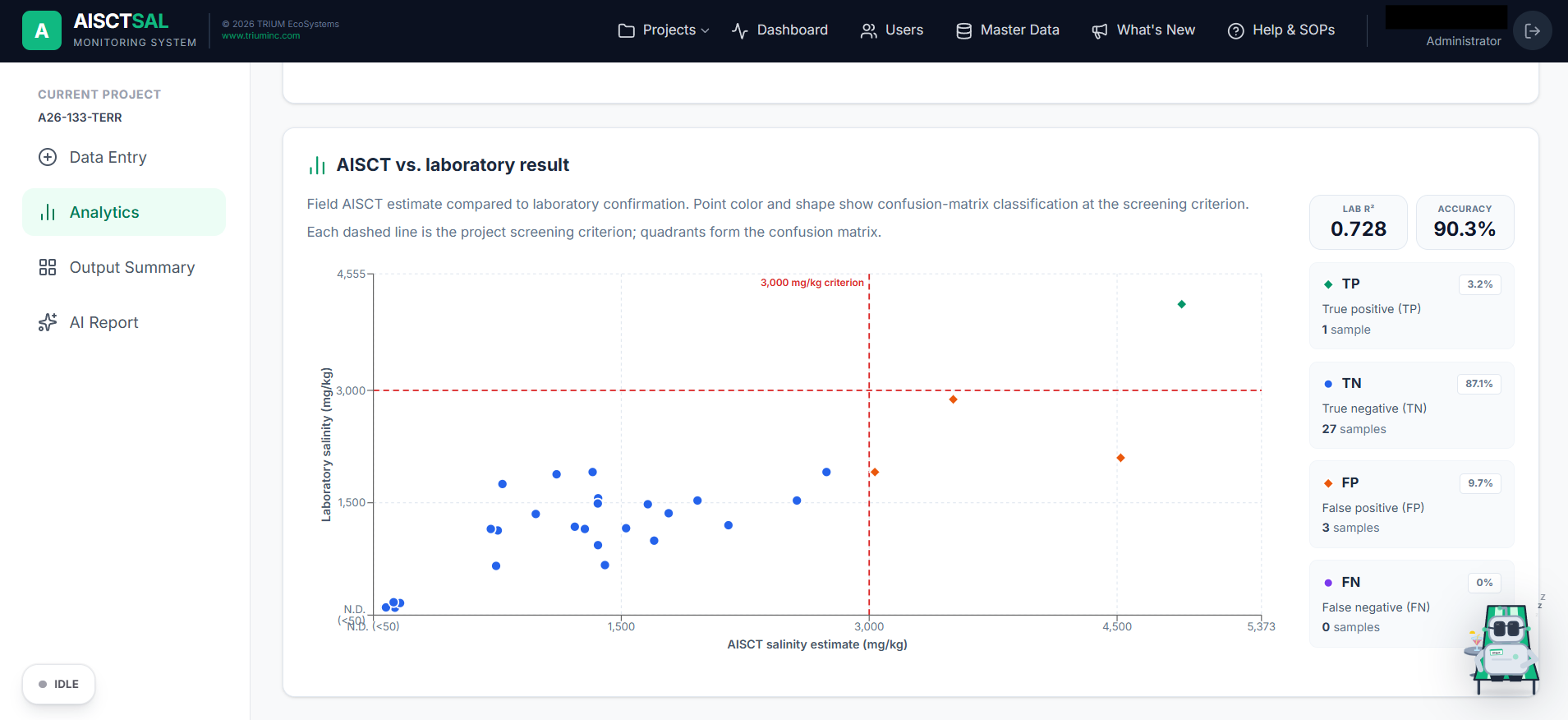
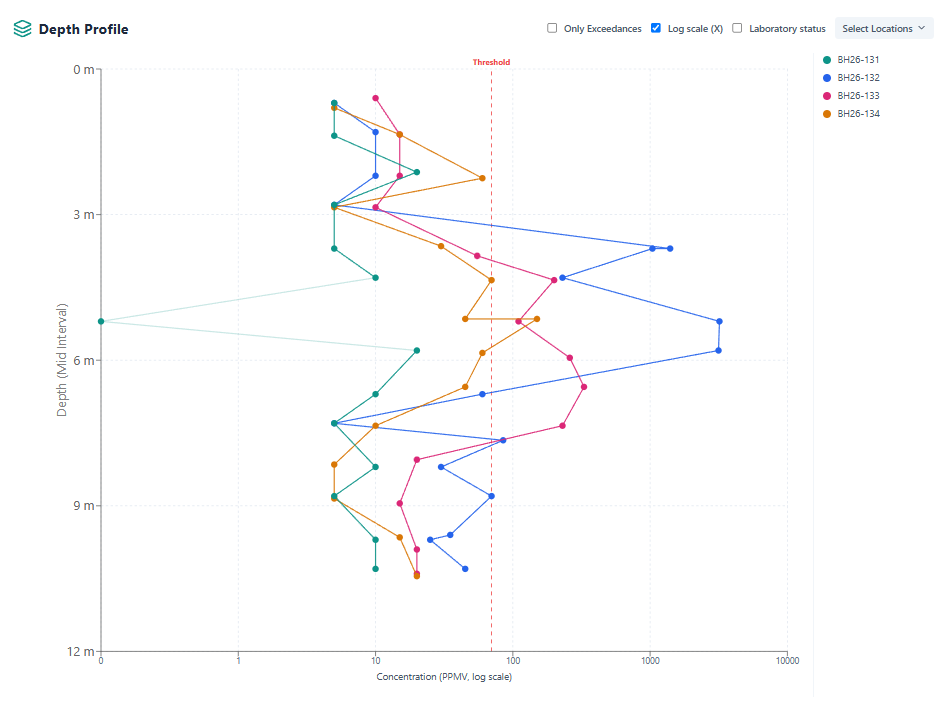
Project managers access the DSS through a web-based dashboard that provides site-level data summaries, investigation progress tracking, laboratory submission status, regulatory exceedance mapping, and exportable reports for client and regulatory deliverables.
AISCT programmes routinely generate data volumes that are an order of magnitude larger than conventional sparse-sampling programmes. A single remediation event might produce 200–400 AISCT measurements compared to 15–25 laboratory samples in a conventional programme. This data density is the source of AISCT's value — but only if the data can be managed, interpreted, and acted upon in real time.
The DSS transforms data volume from a management burden into a strategic asset. AI interpretation scales effortlessly with data density: the more data the DSS receives, the more precisely it can characterize the site, identify trends, and support decisions. The professional's workflow does not become more complex as data density increases — the DSS handles the complexity.
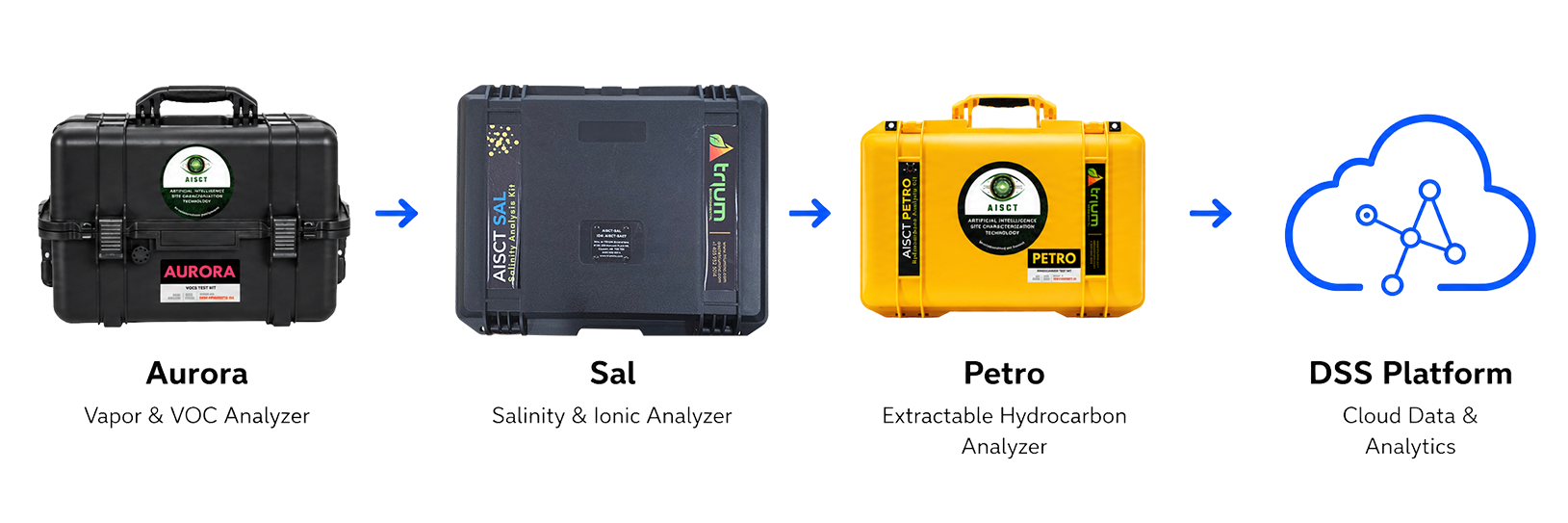
Physical AI requires both sides of the equation: the hardware that generates reliable, standardized, high-density field data, and the software that makes that data actionable. Aurora, Sal, and Petro provide the data. The DSS provides the intelligence. Together, they form acomplete Physical AI architecture for environmental site characterization — one designed for the operational realities of field work and the evidentiary requirements of regulatory closure.

AISCT components can be deployed individually — Aurora on a vapour-driven hydrocarbon site, Sal on a brine release, Petro on a peat-heavy extractable HC programme. But they are designed to work together. When multiple contaminant classes are present on the same site, a multi-unit deployment produces an integrated dataset that no single instrument can provide.
The DSS platform is contaminant-agnostic: it ingests data from whichever units are deployed, maintains a unified site data record, and provides cross-contaminant intelligence that is invisible when instruments operate independently.

Ready to Transform Your Field Characterization? Request a demonstration or order AISCT® hardware for your upcoming field program.